Canadian orders will ship by November 20, 2026.
United States: This preorder estimate does not apply to in-stock U.S. orders.
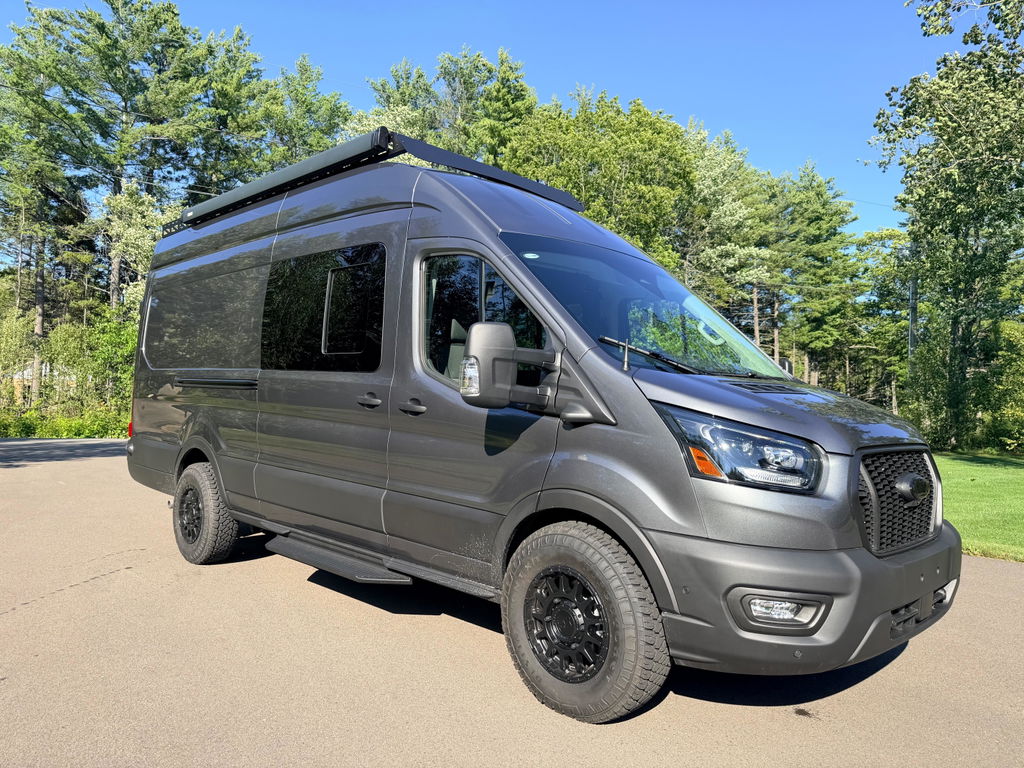
Ford Transit modular aluminum roof rack
Plan a roof platform around your solar panels, ventilation, awning and cargo. The Tec Vanlife modular rack uses aluminum side rails and repositionable crossbars, with vehicle-specific mounting components for the Transit configurations listed below.
Compare Ford Transit roof racks and roof rails.
Select your wheelbase, body length and roof height
- Transit 130 Mid Roof.
- Transit 148 Mid Roof.
- Transit 148 High Roof, non-extended body.
- Transit 148 EXT High Roof, extended body.
These configurations are not intended for Transit Low Roof vans. Select the exact configuration rather than choosing by wheelbase alone. The 148 High Roof and 148 EXT High Roof racks are different configurations.
Mounting and rooftop layout
The rack attaches to the Transit's factory roof-mounting locations using vehicle-specific brackets. Drilling through the van roof is not normally required. Certain accessories may require holes in the rack's aluminum components, depending on their mounting arrangement.
Crossbars can be repositioned around solar panels, roof fans, skylights, air conditioners and other compatible equipment. Confirm equipment dimensions, roof openings, wiring routes, airflow and service clearances before completing the layout.
-
Aluminum side rails: extruded rails with reinforced corners for compatible equipment mounting.
-
Repositionable crossbars: arrange mounting points around your rooftop equipment.
-
Optional decking: compatible modular panels can create designated walk-on areas.
-
Awning planning: compatible Fiamma and Thule awnings require the appropriate brackets and hardware; check awning length and mounting requirements.
What is included
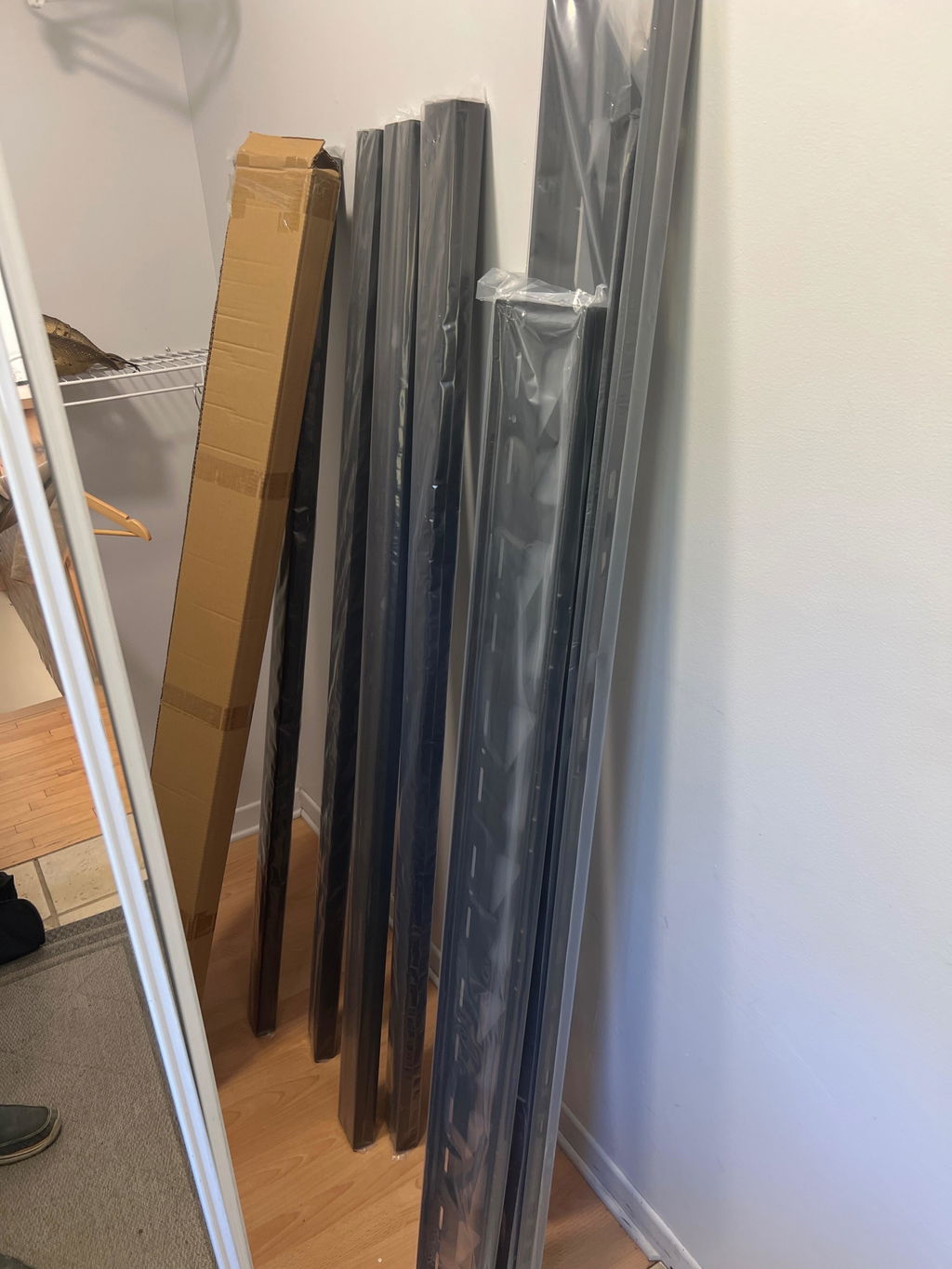
The rack includes aluminum side rails, modular crossbars, a front wind fairing, vehicle-specific mounting components and the required rack-assembly hardware.
Decking, awning brackets, solar brackets, solar panels, cargo boxes and other accessories are not included unless specifically stated in the selected package.
Rack weight and configuration-specific dimensions
Approximate rack weights currently listed
| Configuration |
Approximate weight |
| Transit 130 |
25.4 kg / 56 lb |
| Transit 148 |
32.6 kg / 72 lb |
Decking and every installed accessory add weight. Confirm the final weight for the 148 EXT configuration before ordering. The listed rail profile height is 128 mm, approximately 5 inches.
Use the drawing for your exact configuration. Rack width, crossbar length and usable solar-panel space must not be assumed to be the same across 130, 148 Mid Roof, 148 High Roof and 148 EXT versions. Request the relevant dimensions before buying panels or other equipment.
Transit 148 High Roof: non-extended rack dimensions
The existing diagram below applies only to the Transit 148-inch wheelbase High Roof, non-extended rack: 3,080 mm long x 1,595 mm wide, approximately 121.3 x 62.8 inches. It does not apply to the Transit 130, 148 Mid Roof or 148 EXT racks.

View the full-size Transit 148 High Roof non-extended diagram
Compatible accessories to plan together
Cargo boxes and other equipment must have compatible mounting hardware. Check each accessory's requirements and the complete installed load; listing an accessory here does not establish every possible combination as compatible.
Load limits, walking areas and inspections
The permitted load depends on Ford's roof-load rating, the selected rack configuration and whether the vehicle is moving or stationary. Never exceed Ford's applicable roof-load limits. Include the rack, decking and every accessory in the total.
Use designated areas fitted with compatible decking. Do not walk directly on unsupported crossbars, solar panels or other roof accessories.
Inspect and retighten hardware after the first 160 km / 100 miles, then approximately every 1,000 km / 600 miles or monthly, whichever occurs first. Check again after rough-road travel or if movement, vibration or unusual noise develops.
WARNING: Ignoring the following warnings may result in the rack detaching from the vehicle, leading to serious injury or death.
- Do not exceed the vehicle manufacturer's maximum load limit, and use all available attachment points on the van roof.
- Inspect and tighten all hardware after the first 100 miles and every 600 miles thereafter.
- Check the overall integrity of the rack every 600 miles or monthly, whichever occurs first.
- If unsure, submit rack plans or photos to hello@tecvanlife.com for evaluation before final installation or use.
- The van owner and/or installer assumes all risks associated with rooftop-mounted items and components.
Get a fitment or installation check
Professional installation is available through Tec Vanlife. Contact the team with your model year, wheelbase, roof height, standard or extended body, and planned rooftop equipment to confirm compatibility, installation pricing and appointment availability.